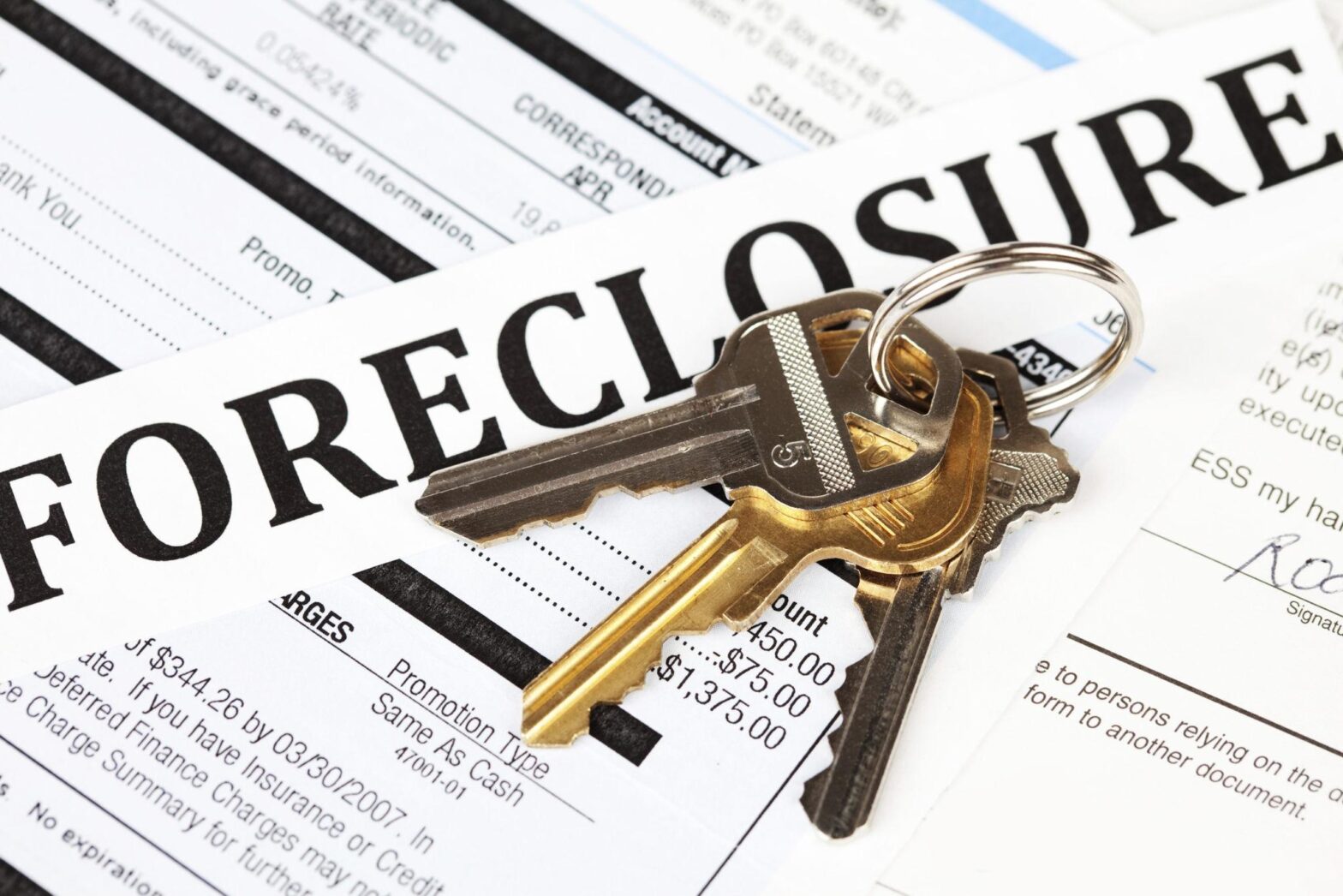
When investors first learn about foreclosure in mortgage note investing, the conversation often begins with cash flow.
Monthly payments. Interest. Yield. Collateral.
But experienced mortgage note investors also ask another important question:
That’s where foreclosure enters the conversation.
Foreclosure shouldn’t be viewed as the objective of a mortgage note investment. With a performing note, the preferred outcome is much simpler:
But investments don’t always follow the preferred path. When a borrower defaults and reasonable workout solutions fail, foreclosure may provide a secured creditor with a legal process to enforce rights against the real estate collateral.
Understanding this process helps explain one of the fundamental principles behind mortgage note investing:
The payment stream matters—but so does the property securing it.
A Mortgage Note Is More Than Monthly Cash Flow
A properly documented real estate loan generally contains two critical components.
📄 Promissory Note: Evidence of the borrower’s obligation to repay the debt according to agreed terms.
🏠 Mortgage or Deed of Trust: The security instrument that encumbers the underlying real estate as collateral, subject to applicable law and lien priority.
That distinction is extremely important.
When purchasing a mortgage note, an investor isn’t simply purchasing anticipated monthly payments. The investor is acquiring a financial asset whose value can also depend heavily upon the real estate securing the debt, lien position, documentation and enforceability of the loan.
That’s why one principle remains central to the A1 Secured Notes philosophy:
A high projected yield doesn’t compensate for poor underwriting.
A missed mortgage payment doesn’t automatically mean an investor should rush to foreclosure.
Depending upon the circumstances, loan documents and applicable laws, possible solutions may include:
A disciplined note investor examines the economics of every reasonable exit strategy.
Performing vs Non-Performing Mortgage Notes: Which Is Better? | A1secured Notes
Sometimes helping a borrower restore payments creates a better financial outcome than foreclosure. A successfully modified or reperforming loan can restore cash flow while allowing the borrower to remain in the property.
But when a workable resolution isn’t possible, the quality of the collateral becomes increasingly important.
Foreclosure is generally the legal process through which a secured creditor seeks enforcement against mortgaged property following a qualifying default.
However, there is no single nationwide foreclosure procedure.
Some states primarily rely on judicial foreclosure, where the process moves through the courts. Other states permit certain forms of nonjudicial foreclosure, often involving a deed of trust or similar security instrument.
Notice requirements, borrower protections, redemption rights, legal expenses, deficiency judgments and timelines can differ significantly from one jurisdiction to another.
That’s why an investor should never rely solely on the assumption:
Equity is important, but it is only part of the equation.
An investor also needs to understand lien priority, taxes, title, loan documents, assignments, property condition, insurance and applicable state foreclosure law.
Qualified legal counsel and competent loan servicing become particularly important when a loan enters default.
The current market makes this discussion particularly relevant.
ATTOM reported 40,277 U.S. properties with foreclosure filings during August 2026, including default notices, scheduled auctions and bank repossessions. That represented a 13% increase from August 2025.
Lenders completed foreclosures on 5,794 properties, representing a 42% year-over-year increase. Importantly, ATTOM also notes that overall foreclosure activity remains below pre-pandemic norms. ATTOM
ATTOM August 2026 Foreclosure Data
The Mortgage Bankers Association’s Q2 2026 National Delinquency Survey provides additional perspective. MBA reported a seasonally adjusted residential mortgage delinquency rate of 4.37%. The percentage of loans in the foreclosure process reached 0.67%, up from 0.48% one year earlier. MBA also reported that seriously delinquent loans increased for the fourth consecutive quarter. MBA
MBA National Delinquency Survey
These numbers don’t suggest that every mortgage is headed toward foreclosure. They reinforce a more practical lesson:
Good underwriting happens before the borrower stops paying.
Higher Interest Rates Can Affect Exit Strategies
Interest rates also matter.
Freddie Mac reported that the average 30-year fixed-rate mortgage reached 7.28% as of October 1, 2026. Freddie Mac
Freddie Mac Mortgage Rate Data
Higher borrowing costs can make refinancing more difficult for some borrowers and can affect affordability and potential exit strategies.
For a mortgage note investor, this raises several important underwriting questions:
What happens if the borrower can’t refinance?
What happens if payments stop?
What happens if the property value declines?
What happens if I eventually need to rely upon the collateral?
Those questions should be asked before purchasing the note—not after default.
Before purchasing a mortgage note, there are several areas I want to understand:
✔ Current Property Value — What is the collateral realistically worth today?
✔ Investment-to-Value (ITV) — How much capital am I investing relative to the property’s value?
✔ Loan-to-Value (LTV) — How large is the outstanding debt compared with the collateral?
✔ Lien Position — Is the mortgage in first position? Are there senior liens?
✔ Property Taxes — Are taxes current?
✔ Insurance — Is adequate coverage in place?
✔ Property Condition — Is the collateral being maintained?
✔ Collateral File — Are the original loan documents complete?
✔ Assignment Chain — Is there a clear chain of ownership?
✔ Foreclosure Process — What does enforcement look like in that particular state?
✔ Legal and Carrying Costs — What could enforcement realistically cost?
✔ Exit Strategies — Is there more than one way to recover capital?
That changes the underwriting conversation.
Instead of asking only:
Suppose an investor buys a mortgage note with a $60,000 unpaid principal balance secured by a property worth $120,000.
At first glance, that appears to provide a substantial equity cushion.
But a disciplined investor digs deeper.
Are the property taxes current? Is there another lien ahead of the mortgage? Is the property actually worth $120,000 in its current condition? Is it insured? Are the assignments properly documented? What would foreclosure and property preservation cost?
The headline property value isn’t enough.
Mortgage note investing requires looking at the complete collateral picture.
This is why A1 Secured Notes prioritizes collateral quality over simply chasing the highest advertised yield.
Foreclosure Should Be the Last Resort, Not the Business Plan
Foreclosure is a tool available to secured creditors under appropriate circumstances—not the desired outcome of a performing-note investment.
The ideal outcome remains:
When trouble occurs, a negotiated solution can sometimes produce a better financial result than immediately pursuing foreclosure.
But secured investing also means preparing for outcomes that aren’t ideal.
That is precisely why the collateral matters.
Investors naturally focus on yield.
8%.
10%.
12%.
15%.
But projected yield is only one part of evaluating an investment.
Consider two hypothetical notes.
One projects a 15% return but has questionable collateral, thin equity and documentation concerns.
Another offers a more conservative return but is supported by stronger collateral, meaningful equity, clean documentation and multiple exit strategies.
The highest projected yield isn’t automatically the better investment.
At A1 Secured Notes, this distinction is fundamental:
Mortgage note investing isn’t about hoping everything goes perfectly.
It’s about creating an investment structure where you’ve considered what happens when it doesn’t.
That means evaluating the borrower, payment history, collateral, property value, lien position, documentation and available exit strategies before deploying capital.
Foreclosure isn’t something investors should hope for.
It’s something knowledgeable investors should understand.
Because ultimately, mortgage note investing isn’t simply about buying cash flow.
It’s about understanding what’s behind that cash flow.
Investor Inspiration
“Risk comes from not knowing what you’re doing.” — Warren Buffett
Understanding default and foreclosure doesn’t make an investor pessimistic.
It makes the investor prepared.
If you’re considering mortgage notes as part of your investment strategy, don’t focus only on the advertised return.
Understand the collateral, equity, lien position, documentation, borrower performance and exit strategies supporting your investment.
Want to discuss how A1 Secured Notes evaluates real-estate-backed mortgage notes?
Schedule a conversation with David Frazier.


